

BMC wiring solutions in detail

We are set up to produce custom cable assemblies at any scale: a one-off prototype, a sample run, or small and large production batches — which makes us a useful partner whether you are developing a new machine from scratch or running an established model month after month.
Batch work is built around repeatability. Lengths, terminals, connectors, marking and the way harnesses are grouped and bagged all follow whatever we agree at the start, so the tenth delivery looks exactly like the first.
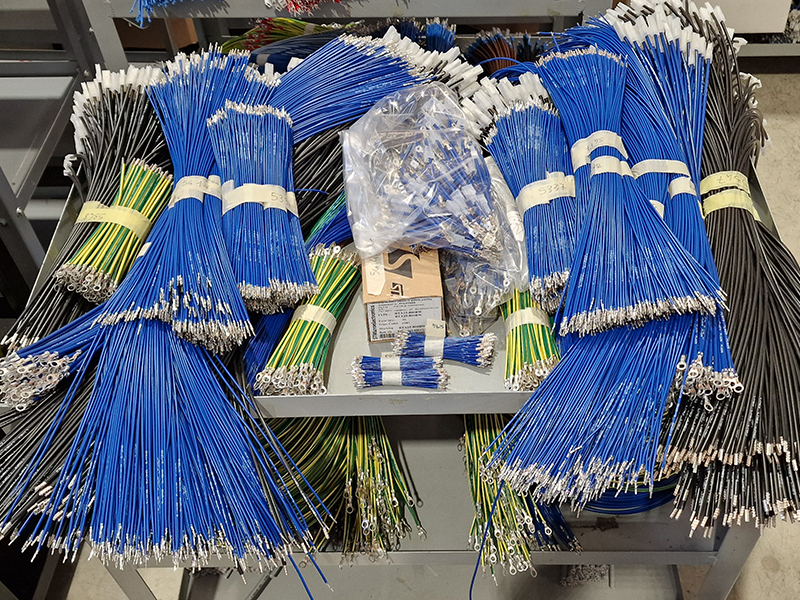
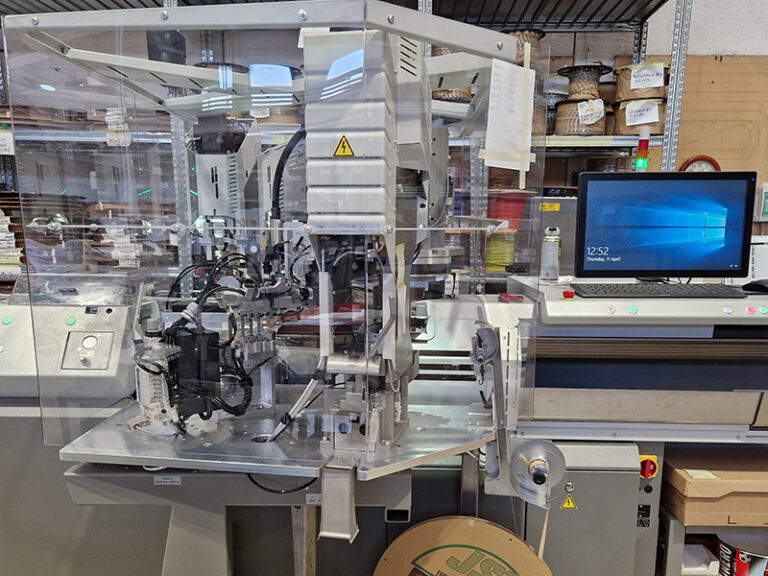
On the shop floor we use dedicated equipment for cable cutting, inkjet wire marking and automatic crimping. Automating those steps is what keeps precision, standardisation and quality consistent across a series — which is precisely where hand-built wiring tends to drift.
Our pre-wired harnesses are built to simplify final assembly. Conductors are cut, identified, terminated, fitted with connectors and grouped according to where they are going, so they can be installed in the machine or the equipment in a fraction of the time.
A harness might cover connections to:
- sensors and actuators
- encoders and limit switches
- solenoid valves
- motors and drives
- safety devices
- operator panels
- control systems
- I/O modules
- any other electrical or electronic component mounted on the machine
Where it helps, we can also work with you on lengths, connection points and identification standards, starting from whatever technical documentation you already have.
For the machine builder, the result is fewer operations kept in-house, less manual work at assembly, and a set of connections that arrives ready to install.
BMC Elettrica also handles PLC wiring, the connections between control modules and field devices, and everything else the automation side needs in order to work as intended.
In an industrial system, clarity is not a cosmetic matter. A connection that has not been properly identified slows testing down, makes fault-finding harder and lengthens every technical call-out that follows. So we pay close attention to how readable the wiring is, and to keeping what we build and what the documentation says in step with each other.
Tidy wiring keeps paying back long after the machine has been handed over. Maintenance staff and engineers can trace cables, signals and devices quickly, which shortens fault-finding and makes later modifications or extensions far simpler.